




Step 1: Design Consultation and Renderings
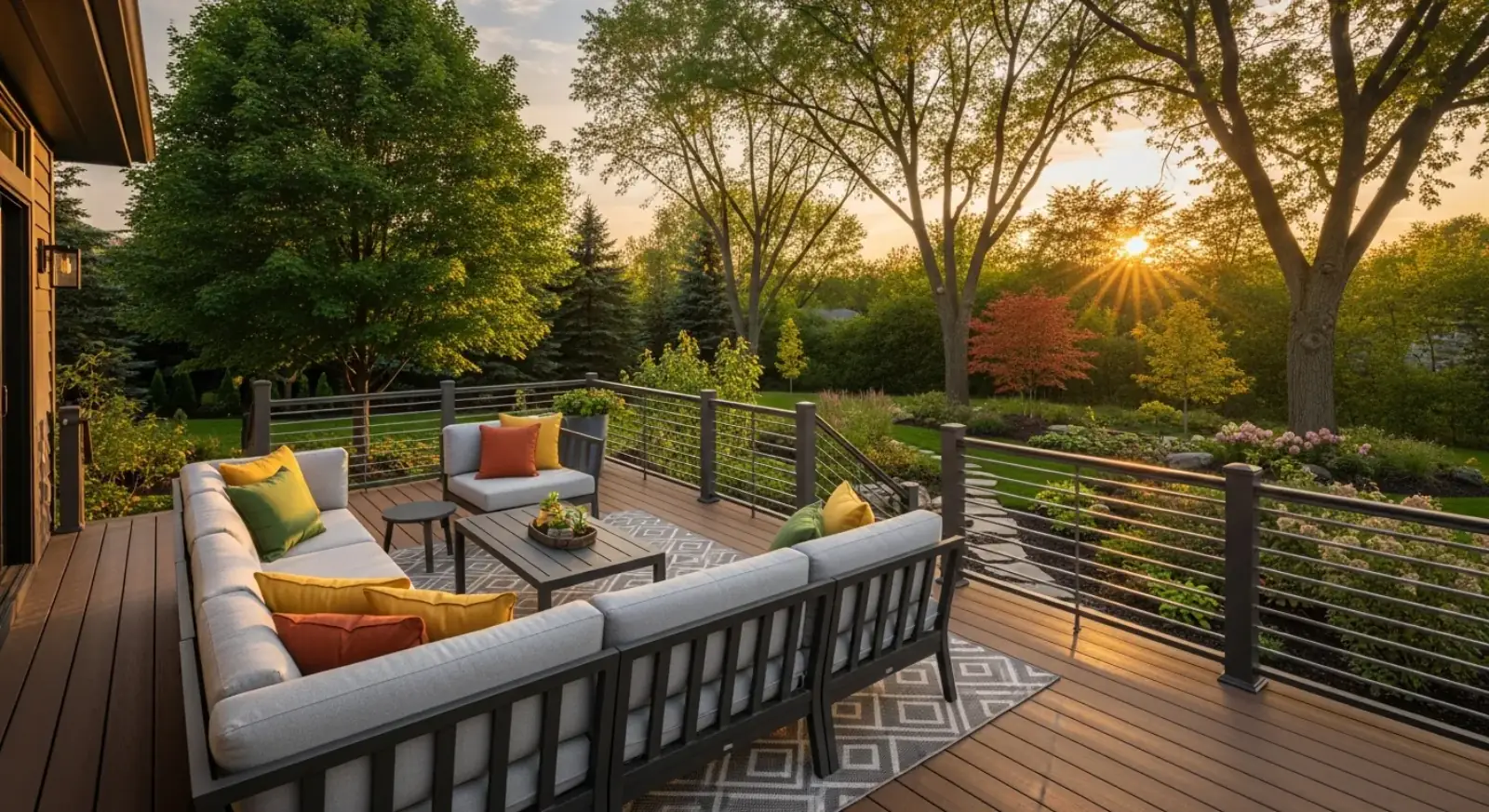
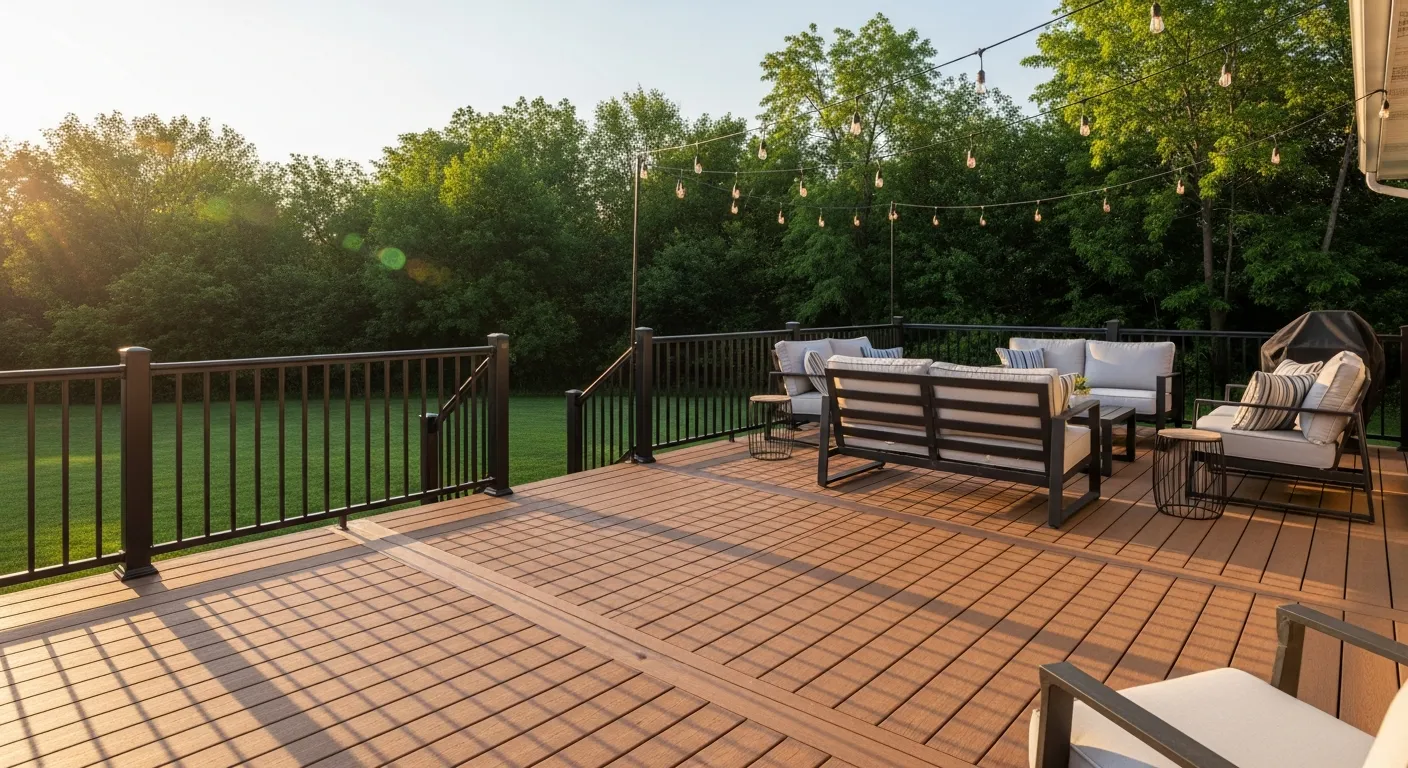
Great decks are designed around how you'll live on them. We start by asking about grilling and dining zones, furniture sizes, traffic flow to the yard, privacy, and views, then measure the site — door heights, grade changes, setbacks, and sun exposure. You receive detailed renderings showing board colors, railing styles, stairs, and lighting before anything is built, so decisions happen on screen instead of mid-construction.
Step 2: Material Selection
Weatherguard builds with TimberTech Azek, Trex, and Wolf decking — the three composite and PVC lines named on our deck service page — plus aluminum, composite, and cable railing systems. Each has strengths: TimberTech Azek and Wolf Serenity PVC for maximum moisture immunity, Trex for the industry's broadest color range and track record. We'll show you samples in direct sunlight so you can judge color and heat honestly.
Step 3: Permits and Engineering
Decks are structures, and we treat them that way. Weatherguard prepares plan drawings, pulls the building permit, and schedules the required municipal inspections. Ledger attachment, beam spans, joist spacing, and railing loads all follow code and the decking manufacturer's span tables — the details that decide whether a deck is safe under thirty people and three feet of snow.
Step 4: Footings Below the Frost Line
In our northern service area, footings must reach below the frost line — at least 42 inches below grade in Minnesota, deeper in parts of Wisconsin — so seasonal ground movement can't heave the structure. We dig, form, and pour concrete footings sized to the deck's loads, and the first municipal inspection typically happens here, before framing begins.
Step 5: Framing and Ledger Flashing
The frame is the deck's skeleton: pressure-treated beams and joists, hangers and hardware rated for treated lumber, and — critically — a properly flashed ledger connection at the house. Ledger failures cause the vast majority of deck collapses, and improper ledger flashing quietly rots rim joists for years before anyone notices. We flash this connection to code and manufacturer specification on every build, and we install joist protection tape on request to extend frame life to match the 25-50 year decking above it.
Step 6: Decking, Railing, and Finishing
Boards go down with hidden fastener systems for a clean, screw-free surface, with manufacturer-specified gapping so composite and PVC can expand and contract through extreme seasonal temperature swings. Picture-frame borders, contrasting fascia, stair details, railing systems, and integrated lighting finish the project. A final municipal inspection and our own quality walkthrough close out construction.
Warranties on Your New Deck
Composite and PVC decking carries some of the strongest warranties in home improvement — 50-year fade and stain coverage on TimberTech Azek and Trex Transcend, 50 years on Wolf Serenity, with limited structural warranties against rot and splintering. Weatherguard adds its own written workmanship warranty covering footings, framing, ledger attachment, and installation, so the structure is protected as long as the boards.
Timeline
Most custom deck projects complete in one to three weeks on site, including inspection days. Footings can be dug most of the year, and off-season winter builds are common — your deck is ready the first warm weekend of spring.