
 By
By 
When gutters overflow during a rainstorm, most homeowners assume they’re clogged with leaves or debris. While clogged gutters are certainly common, they’re not the only reason water spills over the edge. In many cases, the real problem is something that’s nearly impossible to see from the ground: improper gutter pitch.
Every gutter system relies on gravity to move rainwater from the roof to the downspouts. If the gutters aren’t installed with the correct slope, water slows down, pools inside the gutter, and eventually overflows. Over time, that seemingly minor issue can contribute to damaged fascia boards, stained siding, eroded landscaping, foundation problems, and even ice dams during the winter.
Fortunately, gutter pitch is easy to understand once you know how a properly designed system works. In this guide, we’ll explain how gutter pitch is calculated, why it matters, common signs of drainage problems, and what homeowners can do if their gutters aren’t performing as they should.
What Is Gutter Pitch?
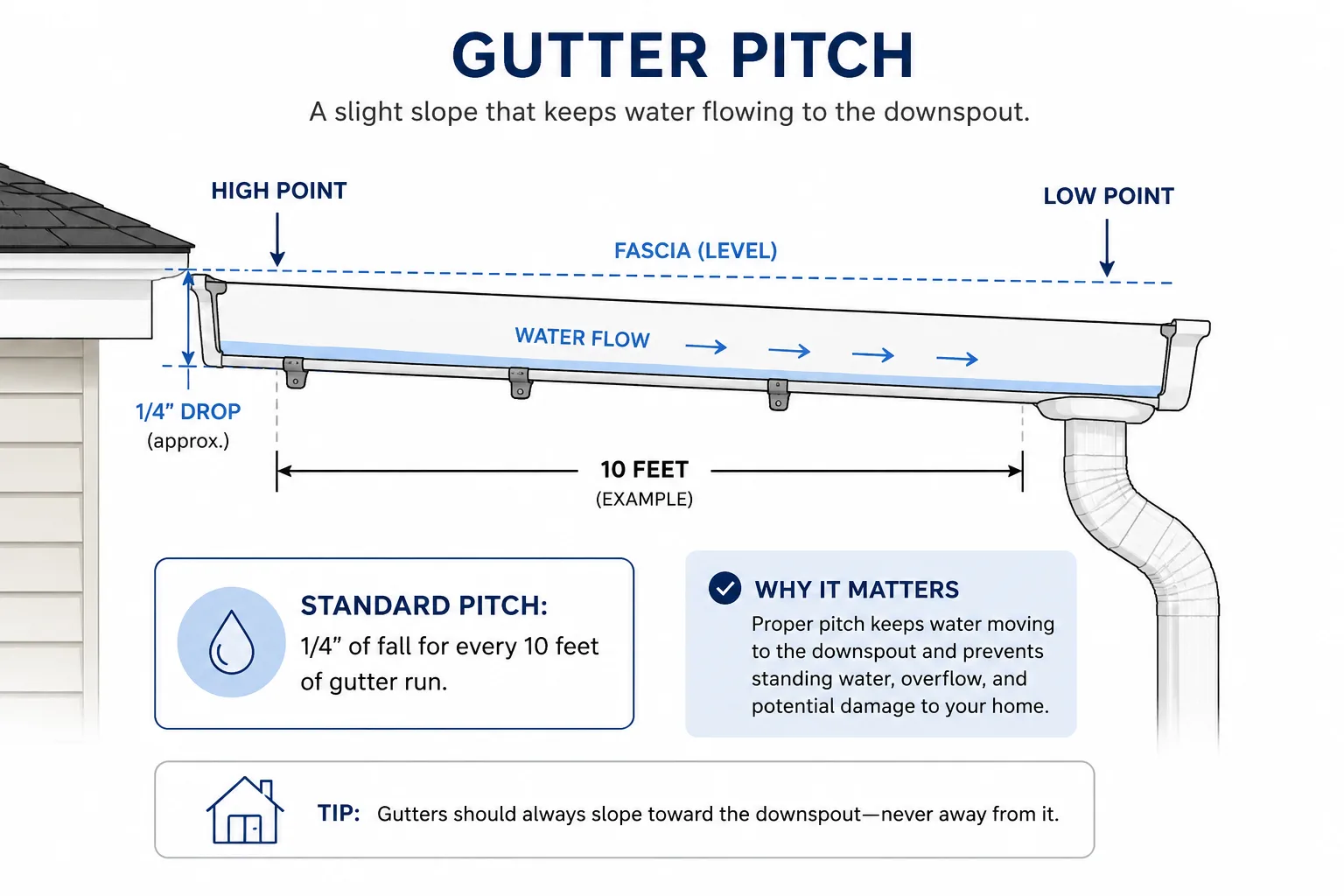
Gutter pitch, also called gutter slope, is the slight downward angle built into a gutter system that allows rainwater to flow toward the downspouts.Although gutters appear perfectly level from the ground, they’re intentionally installed with a gradual slope. That change in elevation is small enough that it doesn’t affect the appearance of your home, but it’s enough for gravity to keep water moving.
Most residential gutters are installed with approximately ¼ inch of fall for every 10 feet of gutter. On a typical 30-foot gutter run, that means the end nearest the downspout is only about ¾ inch lower than the opposite end. That may not sound like much, but it’s enough to keep water flowing efficiently without making the gutters look crooked.
Imagine placing a marble on a kitchen table. If the table is perfectly level, the marble stays where it is. Raise one end slightly, and the marble begins rolling toward the lower side. Water behaves the same way. It naturally follows the path of least resistance, and gutter pitch creates that path.
How Gutter Pitch Works
Why Proper Gutter Pitch Matters
A gutter system has one primary job: collect rainwater from the roof and move it safely away from your home before it has a chance to cause damage. That sounds simple, but consider how much water your gutters actually handle.
A single inch of rain falling on a 2,000-square-foot roof produces more than 1,200 gallons of water. During a heavy summer thunderstorm, much of that water reaches your gutters within minutes.
If the gutters are pitched correctly, water continuously flows toward the downspouts and exits the system almost as quickly as it enters. If they’re too level, however, the water begins to slow. Instead of draining, it collects inside the gutter until the water level rises high enough to spill over the front edge or behind the gutter against the fascia board. This is why gutter pitch is just as important as gutter size. Even oversized six-inch gutters won’t perform well if the water isn’t moving efficiently toward the downspouts.
💡 Weatherguard Expert Insight
During gutter inspections, homeowners often tell us, “They only overflow during really heavy rain.”
That detail is important. If the gutters are clean but consistently overflow during storms, it often indicates a drainage issue rather than a maintenance issue. An inspection can determine whether the system needs additional downspouts, a pitch adjustment, or a larger-capacity gutter.
What Happens When Gutters Don’t Drain Properly?
Improper gutter pitch doesn’t usually cause dramatic problems overnight. Instead, it creates small drainage issues that become more serious over time.
One of the first signs is standing water inside the gutter after the rain has stopped. Water should continue flowing until the gutter is nearly empty. If puddles remain hours or even days later, they’re usually collecting in a low spot.
Standing water creates several problems.First, it allows dirt, shingle granules, and organic debris to settle to the bottom of the gutter instead of washing out through the downspout. As that debris builds up, it begins trapping even more water, accelerating the problem.
Second, water is surprisingly heavy. A single gallon weighs just over 8 pounds. If several gallons remain trapped inside one section of gutter, the extra weight places constant stress on the hangers, fasteners, and fascia board supporting the system. Over time, this can cause sections of gutter to sag, making drainage even worse.
Finally, homeowners in northern climates face another challenge: winter. Water that remains trapped inside the gutter eventually freezes. As ice expands, it adds even more weight and increases the likelihood of loose gutters, damaged fasteners, and ice dam formation along the roof edge. For these reasons, correcting a drainage issue early is usually far less expensive than repairing the damage it causes later.
Is Overflow Always Caused by a Clog?
Not necessarily. Leaves and debris are the most common cause of overflowing gutters, but they’re not the only cause. A gutter that’s perfectly clean can still overflow if it wasn’t designed or installed correctly. For example, a long section of gutter with only one downspout may simply collect more water than it can drain during heavy rainfall. Likewise, a gutter installed with little or no pitch may never allow water to reach the outlet efficiently.
This is why professional gutter inspections look at the entire drainage system, not just whether leaves are present. Installers evaluate gutter pitch, downspout placement, gutter capacity, roof drainage patterns, and any low spots that may be preventing proper flow. Simply cleaning the gutters may temporarily improve performance, but if the underlying pitch is incorrect, the same problems are likely to return with the next heavy rain.
How Professionals Calculate Gutter Pitch
Installing gutters isn’t as simple as fastening them to the fascia board. Before the first hanger is installed, professional contractors evaluate how rainwater will travel across the roof and through the gutter system.
Several factors influence the correct pitch, including:
The total length of each gutter run
Roof size and roof pitch
The location of roof valleys
Expected water volume during heavy rainfall
Number and placement of downspouts
Gutter size and capacity
For most homes, installers aim for approximately ¼ inch of slope for every 10 feet of gutter. However, longer gutter runs often require additional planning.
For example, a 40-foot section of gutter may not simply slope in one direction. Instead, installers may create a high pointnear the middle of the run, allowing water to flow toward downspouts at both ends. This reduces the amount of water each downspout must handle and helps prevent overflow during heavy rain.
Professional installers use laser levels, chalk lines, digital levels, or string lines to ensure the slope is consistent across the entire run. Even small inconsistencies can create low spots where water collects.
Can Gutters Have Too Much Pitch?
While insufficient pitch is far more common, it’s also possible to install gutters with too much slope.
A gutter with excessive pitch usually won’t hold standing water, but it creates its own problems. Because the front edge of the gutter becomes noticeably lower than the roofline, the system can look uneven from the street. Homeowners often describe these gutters as looking “crooked” or “wavy.”
Excessive slope can also reduce the amount of water the gutter captures during very heavy rainfall. Instead of flowing neatly into the gutter, water may overshoot sections of the system, particularly beneath roof valleys where runoff is concentrated.
The goal isn’t to create the steepest slope possible—it’s to create just enough slope for reliable drainage while maintaining an attractive appearance. A properly installed gutter should look level to the eye while quietly directing water exactly where it needs to go.
Common Signs Your Gutters May Have a Pitch Problem
Improper pitch often develops gradually, making it easy to overlook until noticeable damage appears. Fortunately, your gutters usually provide warning signs long before major repairs become necessary.
Some of the most common indicators include:
Water remains inside the gutters long after rain has stopped.
One section consistently overflows while the rest drains normally.
Gutters begin pulling away from the fascia.
Soil beneath one section is constantly washed out.
Water stains appear beneath the gutter.
Plants, moss, or algae begin growing inside certain areas.
Ice forms repeatedly in the same location during winter.
If several of these symptoms occur together, it’s worth scheduling an inspection to determine whether the issue is clogged gutters, improper pitch, insufficient downspouts, or another drainage problem.
Can Incorrect Gutter Pitch Be Fixed?
In many cases, yes. One of the biggest misconceptions homeowners have is assuming overflowing gutters automatically need to be replaced. While replacement is sometimes necessary, many drainage issues can be corrected without installing an entirely new gutter system. The appropriate solution depends on why the drainage problem developed.
If the gutters were originally installed with insufficient slope, technicians may be able to remove and reinstall sections at the proper pitch. If the issue is caused by loose fasteners or sagging hangers, simply re-securing the system may restore proper drainage.
Long gutter runs may benefit from an additional downspout, reducing the amount of water each section must carry during heavy storms. During an inspection, a contractor will evaluate not only the pitch itself but the entire drainage system to determine the most effective solution.
💡 Weatherguard Expert Insight
We’ve inspected homes where homeowners believed they needed an entirely new gutter system, only to find that a simple pitch adjustment solved the problem. Before investing in replacement gutters, it’s worth having the existing system evaluated by a professional.
Maintaining Proper Gutter Performance
Even perfectly installed gutters require occasional maintenance.
Leaves, twigs, shingle granules, and other debris gradually accumulate inside the gutter system. If left unattended, these materials slow water flow and create conditions similar to an improperly pitched gutter.
To help your gutters perform their best, we recommend:
Cleaning gutters at least twice each year.
Inspecting gutters after severe storms.
Checking for standing water after heavy rainfall.
Looking for loose fasteners or sagging sections.
Trimming branches that hang directly over the roof.
Making sure downspouts discharge several feet away from the foundation.
Regular maintenance allows small problems to be corrected before they lead to expensive repairs.
Annual Gutter Maintenance Calendar

Frequently Asked Questions
How can I tell if my gutters have enough pitch?
The easiest way is to observe them during or immediately after a heavy rain. Water should move steadily toward the downspouts without pooling. If standing water remains after the rain has stopped, the pitch—or another drainage issue—may need to be evaluated.
Can I adjust gutter pitch myself?
Minor adjustments may be possible on some systems, but changing the pitch often requires loosening hangers, re-establishing the correct slope, and ensuring the gutters remain straight. Incorrect adjustments can create new drainage problems, so professional repairs are generally recommended.
Do seamless gutters still need to be pitched?
Yes. Seamless gutters eliminate joints that can leak, but they still depend on gravity to move water toward the downspouts. Every gutter system requires proper pitch regardless of its construction.
Will gutter guards fix a pitch problem?
No.
Gutter guards help reduce debris entering the gutter, but they don’t change how water flows. If the gutter isn’t pitched correctly, water will still pool or overflow regardless of whether guards are installed.


